
Tianyida manufactures custom sheet metal parts, enclosures, frames and welded assemblies to customer drawings. Our team supports industrial OEM projects that require dependable dimensional control, clean workmanship and consistent execution across multiple manufacturing stages.
Before production begins, we review the material, geometry, bend requirements, tolerances, welding details, finishing specifications and assembly expectations. This engineering-led approach helps identify risk early and creates a clearer path from prototype validation to stable production.
Material, bend design, tolerance strategy and finishing requirements must work together before the first sheet is cut.
Confirm the specified grade, thickness, grain or cosmetic requirement and how the material affects forming and welding.
Review bend radius, flange length, reliefs, hole-to-bend distance and feasible forming sequence.
Separate function-critical dimensions from general tolerances and account for variation introduced by bending and welding.
Confirm weld type, hardware, threads, interfaces and access for assembly or downstream operations.
Plan masking, coating thickness, visible surfaces, color, texture and corrosion protection before fabrication.
Ensure the approved prototype process can transition into repeat production with controlled quality.
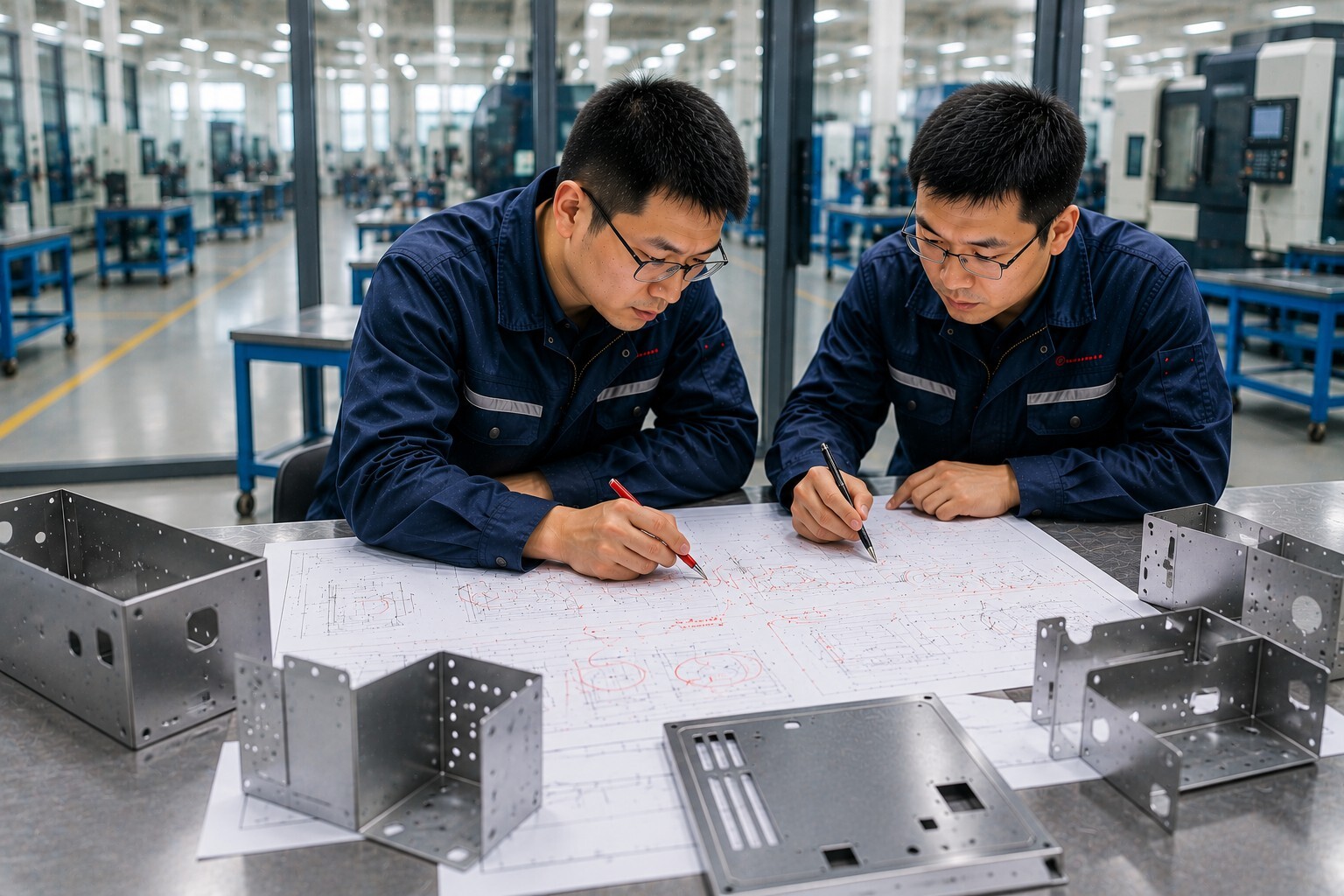
Sheet metal parts often fail to meet expectations because important relationships were not resolved during design review. A bend may interfere with a hole, a tolerance may be unrealistic after welding, or a coating may change the fit of an assembly.
Our engineering review considers the complete manufacturing route—not only one operation. Questions are raised before production so the drawing, process plan and inspection method can support the part’s functional purpose.
From individual brackets to complete welded structures, every component is manufactured around its function and assembly requirements.
Laser-cut or punched profiles, covers, panels, plates and formed components.
Simple or complex supports with bends, slots, holes, threads and installed hardware.
Custom housings, panels, doors and cabinets for automation, electrical and industrial equipment.
Drilling, boring, reaming and threading strategies are selected for hole size, depth, location and functional fit.
Drawing-based supports and fabricated structures requiring controlled fit and alignment.
Fabricated components supplied with hardware, welded subassemblies and specified surface finishing.
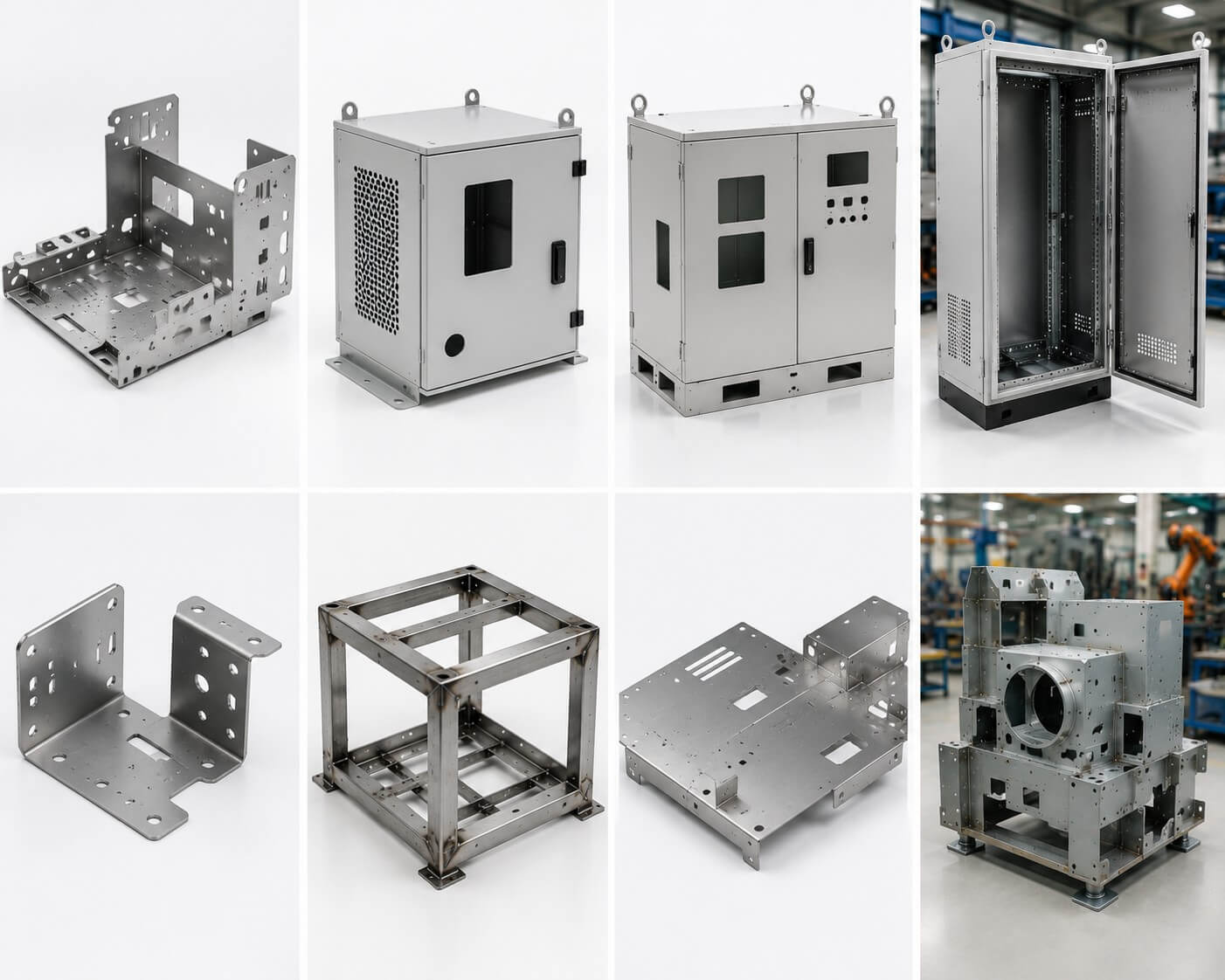
We do not limit projects to a fixed catalogue of products. Our sheet metal fabrication service supports one-off development parts, low-volume assemblies and repeat OEM production across a broad range of shapes and applications.
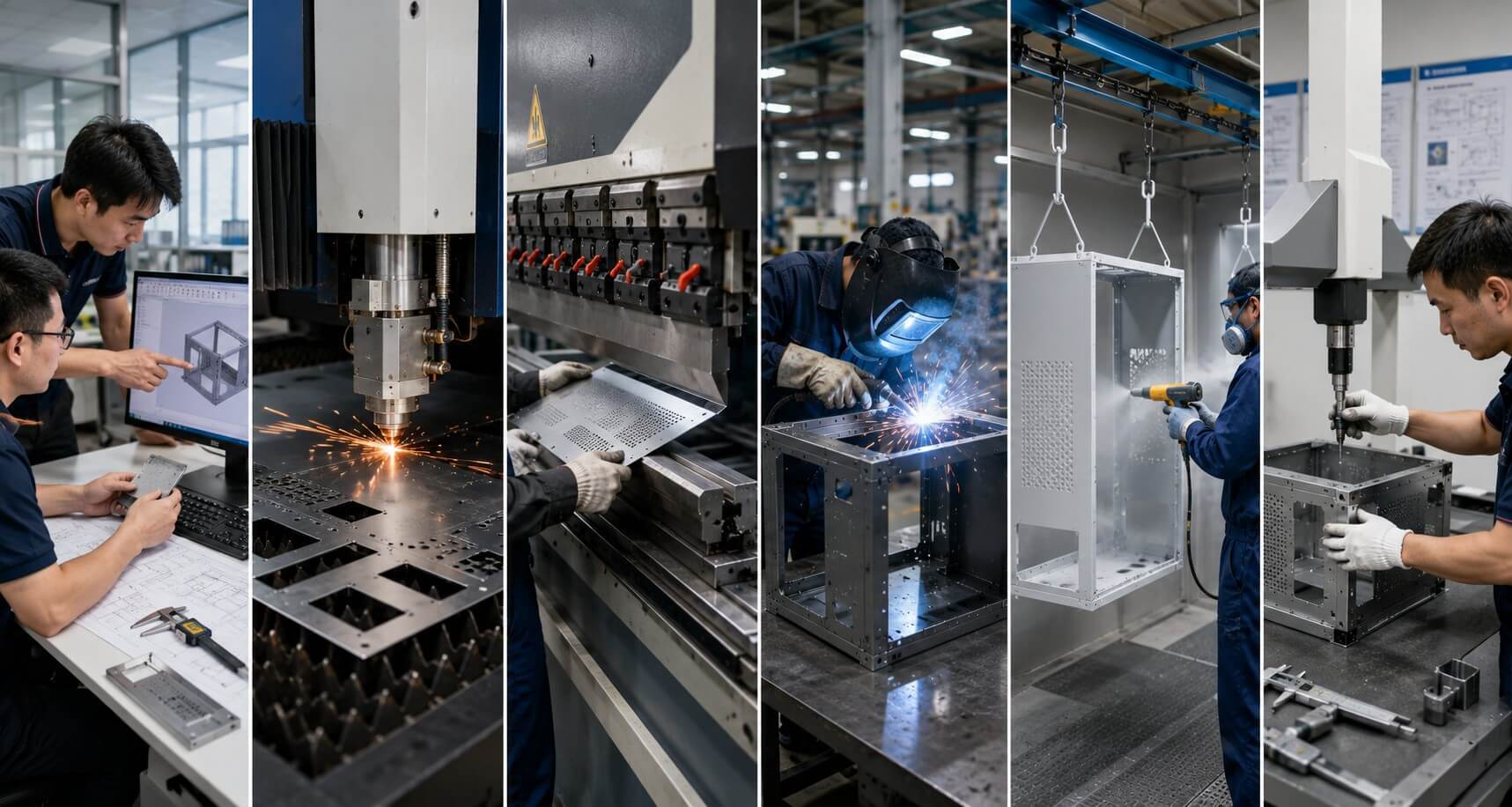
Each project is evaluated for the complete manufacturing route, including cutting, forming, machining features, welding, hardware installation, finishing and final assembly where required.
One coordinated manufacturing route protects fit, appearance and consistency across every stage of the project.
Accurate profiles, holes and cutouts produced for subsequent forming, welding or assembly.
Efficient production of repeat features, perforations and formed details where the design is suitable.
Controlled bend sequence and tooling selection for consistent angles, flange positions and part geometry.
MIG, TIG and specified welding methods applied according to material, structure and appearance requirements.
Tapping, countersinking, riveting, PEM-style hardware insertion and other drawing-specified details.
Fabricated parts can be assembled and supplied with specified surface treatment through a controlled project workflow.
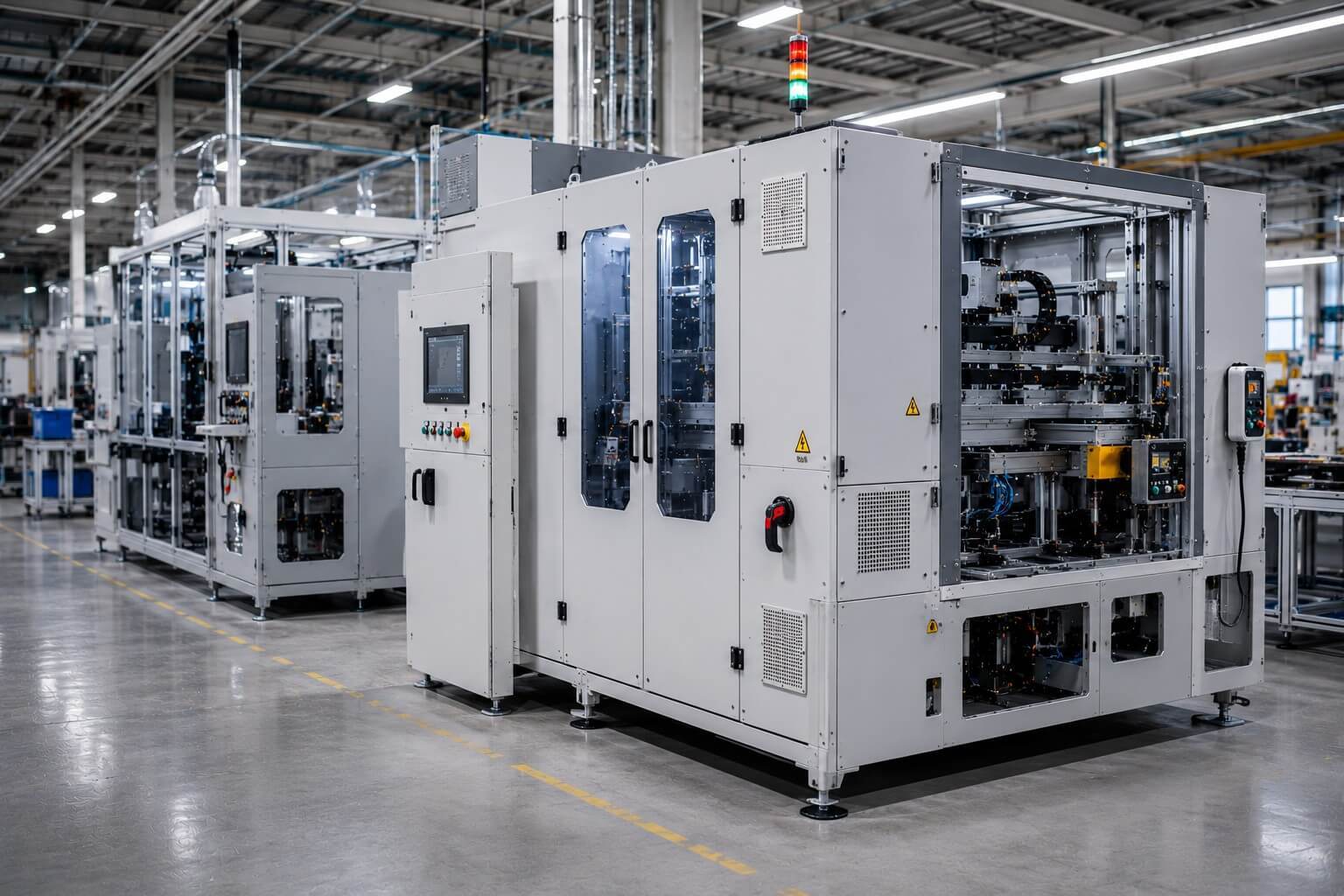
A successful fabricated product is rarely created by one machine. Cutting accuracy, bend sequence, weld control, hardware placement and finishing quality all affect how the final assembly fits and performs.
Tianyida coordinates these operations as one project, with process and inspection requirements defined from the drawing before production.
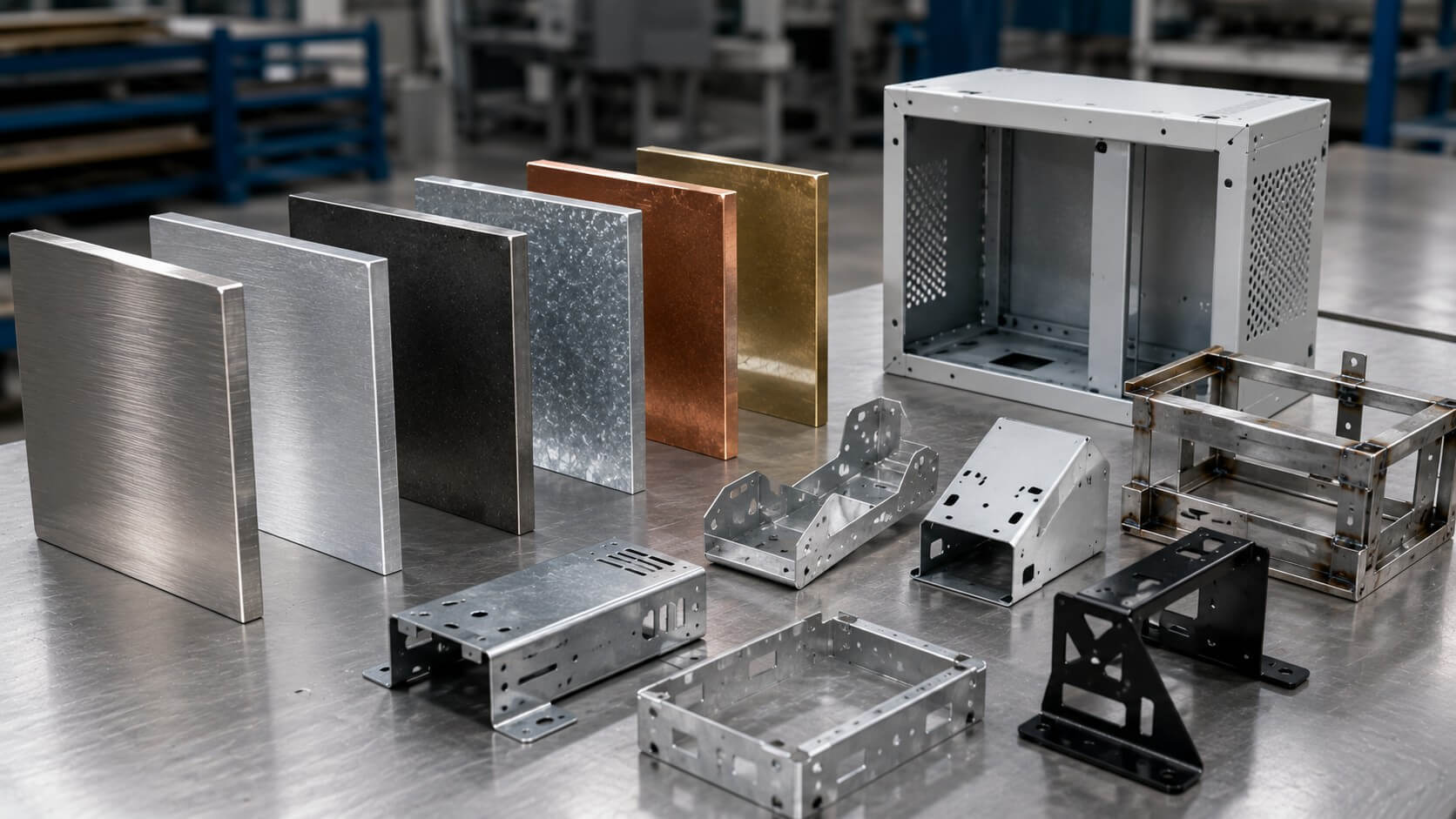
Material grade and thickness influence forming, welding, corrosion resistance, weight, finish and total production cost.
Suitable for corrosion-resistant equipment, enclosures and fabricated assemblies. Grade, surface condition, weld appearance and passivation requirements should be specified.
A strong and cost-effective option for brackets, frames, structures and industrial equipment, typically combined with a protective finish.
Lightweight and corrosion resistant, with good forming potential. Alloy, temper, cosmetic surface and welding requirements affect process selection.
Used for cabinets, ducting and industrial components requiring additional corrosion protection; cut edges and welding areas require consideration.
Selected for conductivity, shielding and specialized applications. Surface protection and handling requirements should be defined.
Additional sheet materials can be evaluated from the drawing, material standard, required quantity and application conditions.
We process common industrial sheet materials according to customer drawings and specifications. The exact grade, condition and thickness should be confirmed before quotation because materials with a similar general name can behave differently during cutting, bending and welding.
Where material selection is still open, our engineering team can discuss practical manufacturing considerations based on the application and required finish.
Welding quality is not only the appearance of the bead—it is the complete control of joint design, distortion, dimensions and final assembly.
Weld symbols, joint access, penetration, appearance and post-weld requirements are clarified before work begins.
Parts are located and supported to protect critical dimensions and repeatable alignment during welding.
Weld sequence, heat input and intermediate checks help control movement and reduce unnecessary correction.
Visible welds, grinding and blending requirements are agreed according to the drawing and final product expectations.
Fasteners, inserts, hinges, panels and fabricated subassemblies are installed according to the assembly plan.
Critical interfaces, hole patterns, overall dimensions and assembly function are checked before finishing or delivery.
Heat input and weld sequence can change the geometry of a sheet metal assembly. Without the right fixtures and checkpoints, individual parts may meet their drawings while the finished structure no longer fits its mating components.
Our welding and assembly planning considers material, joint access, structural requirements, visible surfaces, dimensional interfaces and downstream finishing. Fixtures and inspection points are used as appropriate to maintain repeatable assembly quality.
The correct finish depends on material, environment, assembly interfaces and cosmetic expectations—not color alone.
Durable color and corrosion protection for enclosures, frames and industrial equipment; specify color standard, texture and gloss.
Common for aluminum parts requiring corrosion protection, wear resistance or a controlled appearance.
Protective metallic coating often used for carbon-steel brackets, hardware and industrial components.
Supports the corrosion resistance of stainless-steel components after fabrication and suitable cleaning.
Creates a defined directional or polished appearance for visible stainless-steel and aluminum surfaces.
Painting, black oxide, electropolishing and other treatments can be coordinated when clearly specified and technically suitable.
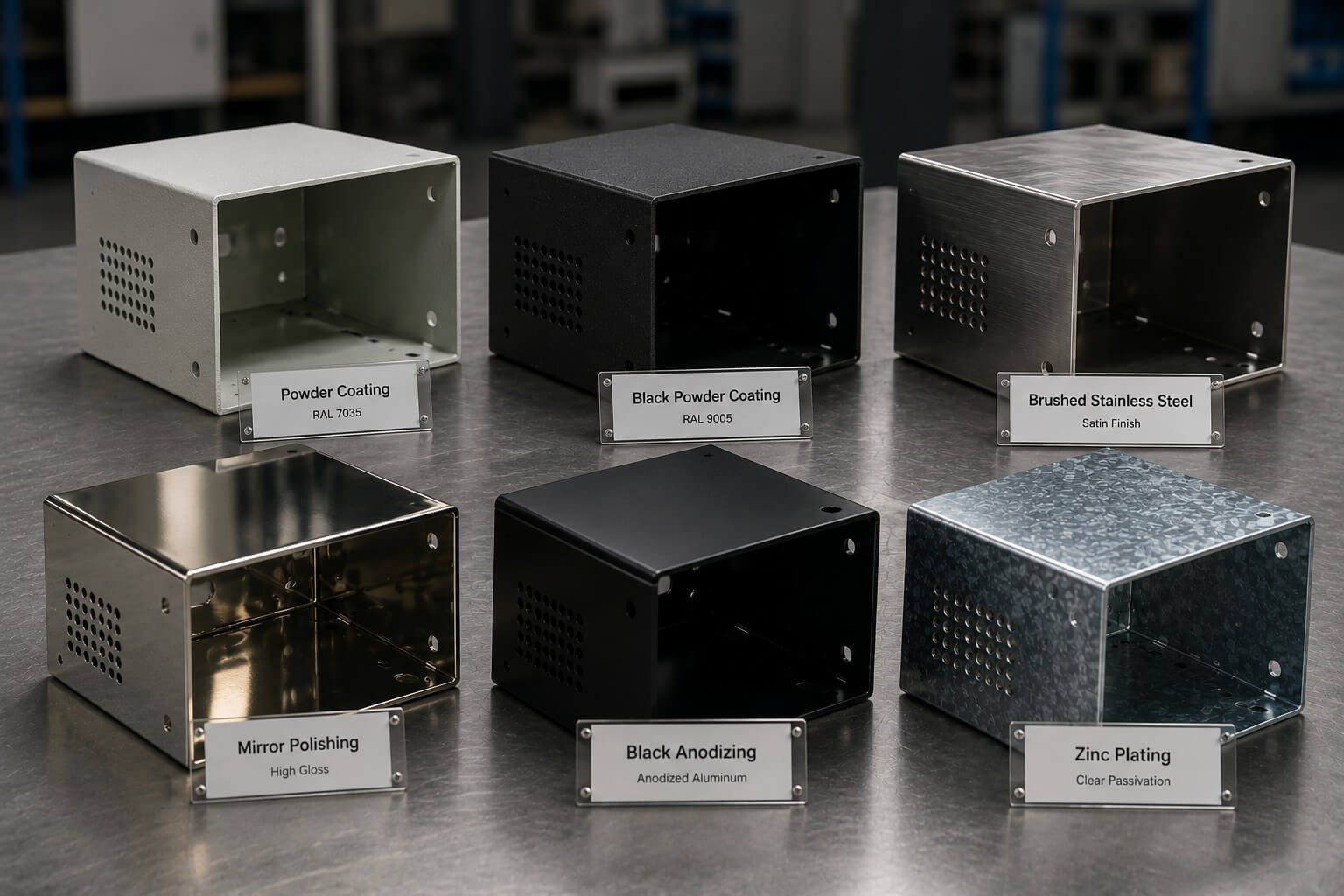
Surface finishing can protect against corrosion, improve cleanability, provide electrical or wear-related properties and create a consistent appearance. It can also add coating thickness or affect threads, grounding points and tight-fit areas.
Finishing requirements are therefore reviewed before fabrication. Masking, visible faces, texture, color standard, gloss level and certificate requirements should be identified on the drawing or RFQ.
Reliable sheet metal production requires dimensional checks, workmanship standards and clear control of every outsourced finish.
Current drawings, revisions, materials, finishes and acceptance requirements are confirmed for production.
Material identification and applicable documentation are checked according to the agreed project requirements.
Initial parts or assemblies are verified before continued production or customer approval where required.
Critical dimensions, bends, weldments and assembly interfaces are monitored at the appropriate manufacturing stage.
Dimensions, appearance, hardware, coating and workmanship are inspected using suitable measuring equipment.
Finished products are separated, protected and packed to reduce scratching, deformation and transit damage.
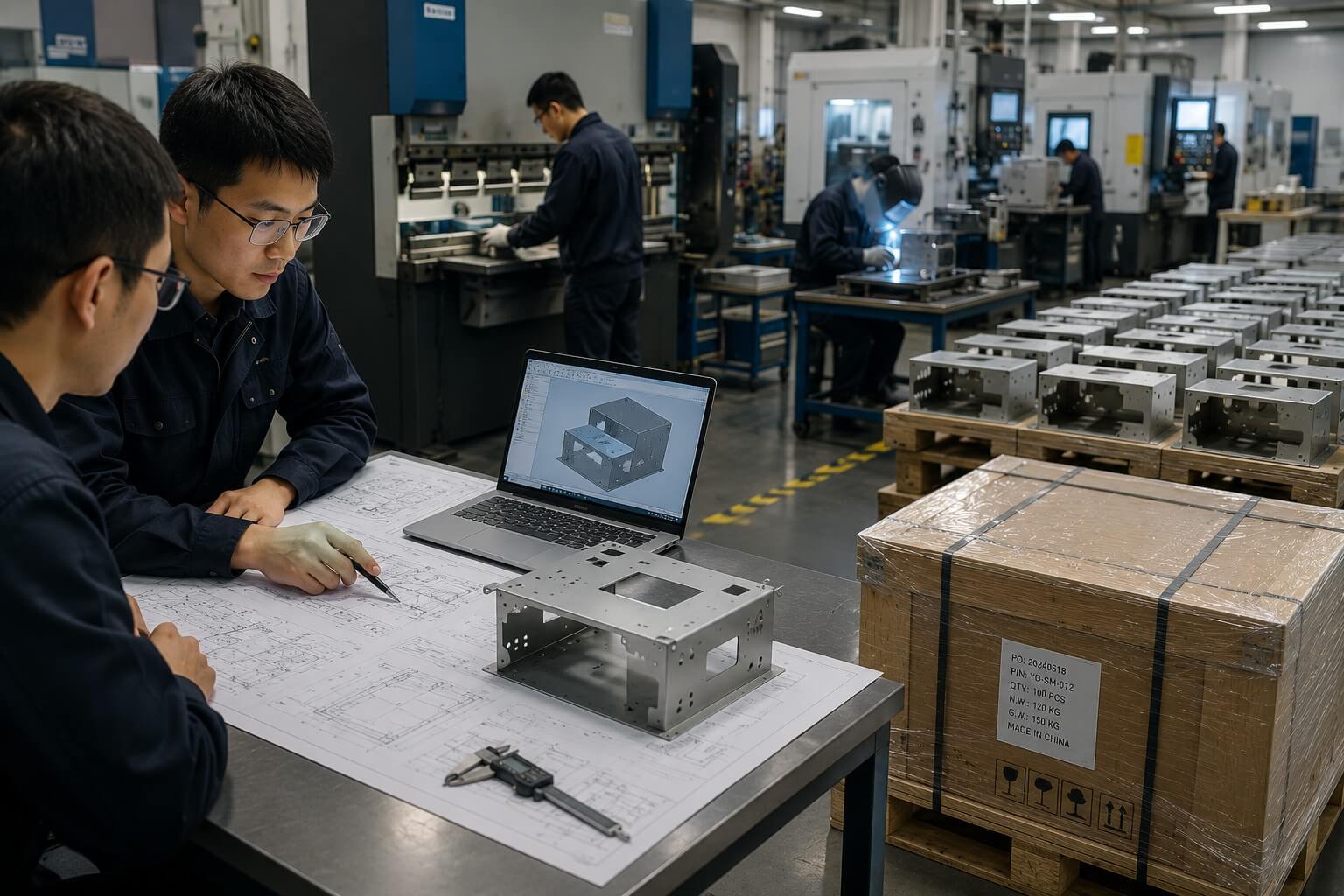
Quality is planned around the drawing and the way the product will assemble and function. Critical dimensions may require different inspection methods before bending, after welding and again after finishing.
Our process combines first-article verification, in-process checks and 100% outgoing inspection. Final parts are cleaned, protected and packed according to their size, surface condition and delivery requirements.
Different applications require different choices in material, construction, finish and inspection.
Machine covers, mounting brackets, frames, guards, control enclosures and fabricated assemblies.
Protective covers, sensor mounts, end-of-arm brackets, structural supports and equipment panels.
Stainless-steel housings, equipment panels, brackets and assemblies manufactured to specified cleanliness and finish requirements.
Cabinets, control boxes, panels, shielding components, mounting plates and assembly-ready enclosures.
Outdoor cabinets, equipment frames, support structures, covers and cooling-related fabricated parts.
Custom panels, bases, welded structures, enclosures and complete drawing-based fabricated assemblies.
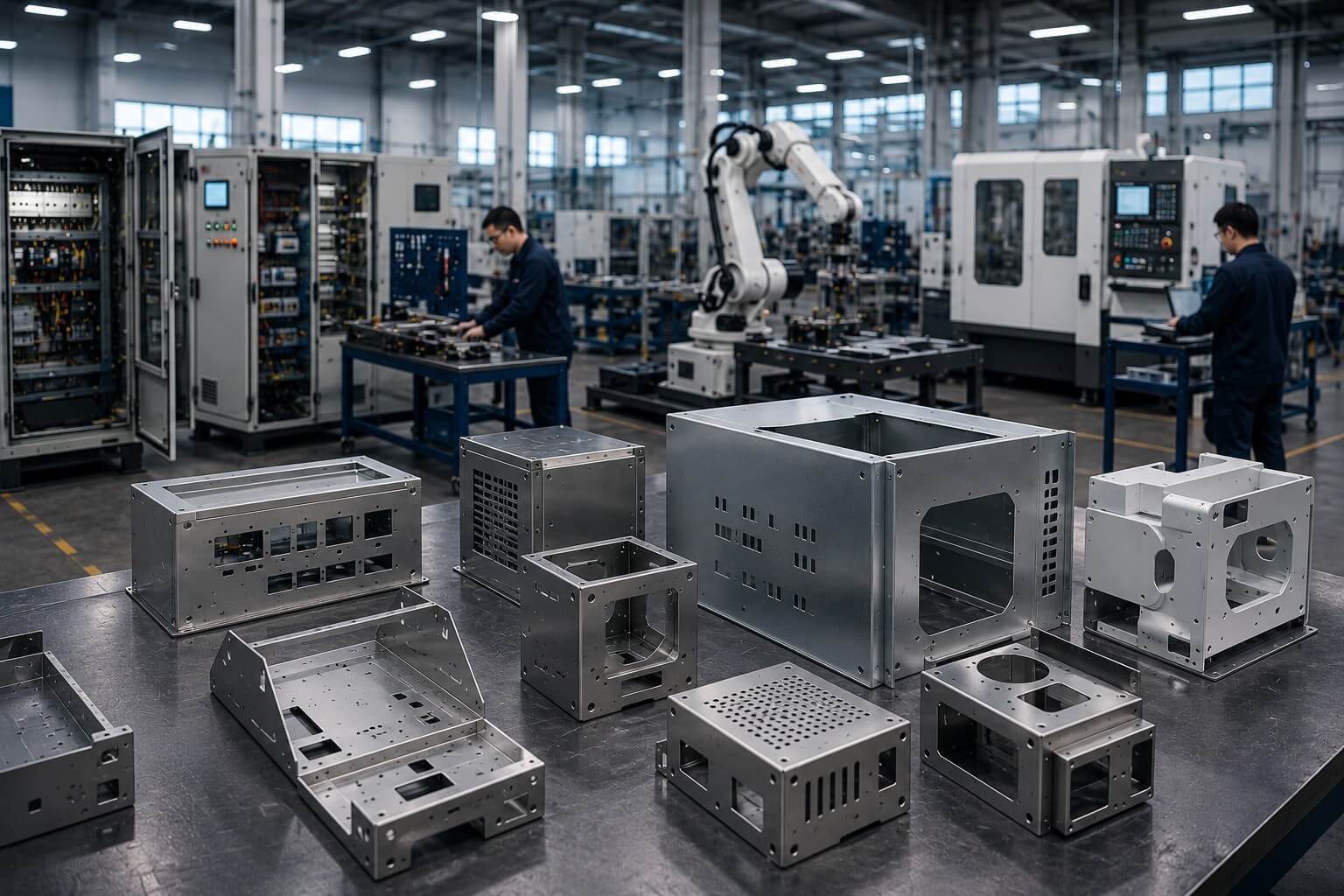
Tianyida supports drawing-based sheet metal projects across multiple industrial sectors. The examples below represent common applications rather than a standard product catalogue.
With 10 years of precision manufacturing experience and an ISO 9001:2015 quality system, we adapt the manufacturing route to each project’s functional, cosmetic and production requirements.
Send your drawings and receive a practical manufacturability review together with a project-based quotation.
Whether you need a prototype bracket, a finished enclosure, a welded frame or an ongoing OEM assembly, our engineering team is ready to review the complete manufacturing requirement.
Send the 3D model, 2D drawing, material, quantity, surface finish and delivery expectations. We will clarify critical questions, evaluate the manufacturing route and prepare a quotation based on the actual scope of your project.
STEP/STP/IGES or another suitable 3D format, plus PDF/DWG/DXF drawings.
Exact grade, sheet thickness and any certification requirement.
Coating type, color, texture, gloss, masking and visible-surface expectations.
Prototype or production quantity, annual demand, destination and target delivery date.
Shenzhen Tianyida Precision Technology Co., Ltd. is a trusted precision manufacturing partner specializing in CNC machining, sheet metal fabrication, rapid prototyping, and complete manufacturing solutions.