
Tianyida manufactures custom CNC-milled components to customer drawings for industrial automation, robotics, medical equipment, semiconductor systems, machinery and other demanding applications. Every project begins with an engineering review of the geometry, material, tolerances, functional interfaces and production quantity. This allows us to select a practical machining route, identify manufacturing risk before cutting begins and build quality verification around the features that matter most.
Machining time and price only become meaningful after geometry, tolerances and functional requirements have been reviewed.
Identify bearing seats, locating surfaces, sealing faces, precision holes, threads and other assembly-critical requirements.
Evaluate deep cavities, thin walls, undercuts, tool reach and features requiring multiple orientations.
Understand datum relationships, positional control, flatness, profile and the features that require focused process control.
Confirm the material grade, heat treatment, surface condition and finishing requirements that affect machining.
Match the fixture, machining sequence and equipment approach to quantity, repeatability and future scale.
Select suitable measurement methods for critical dimensions before production begins.
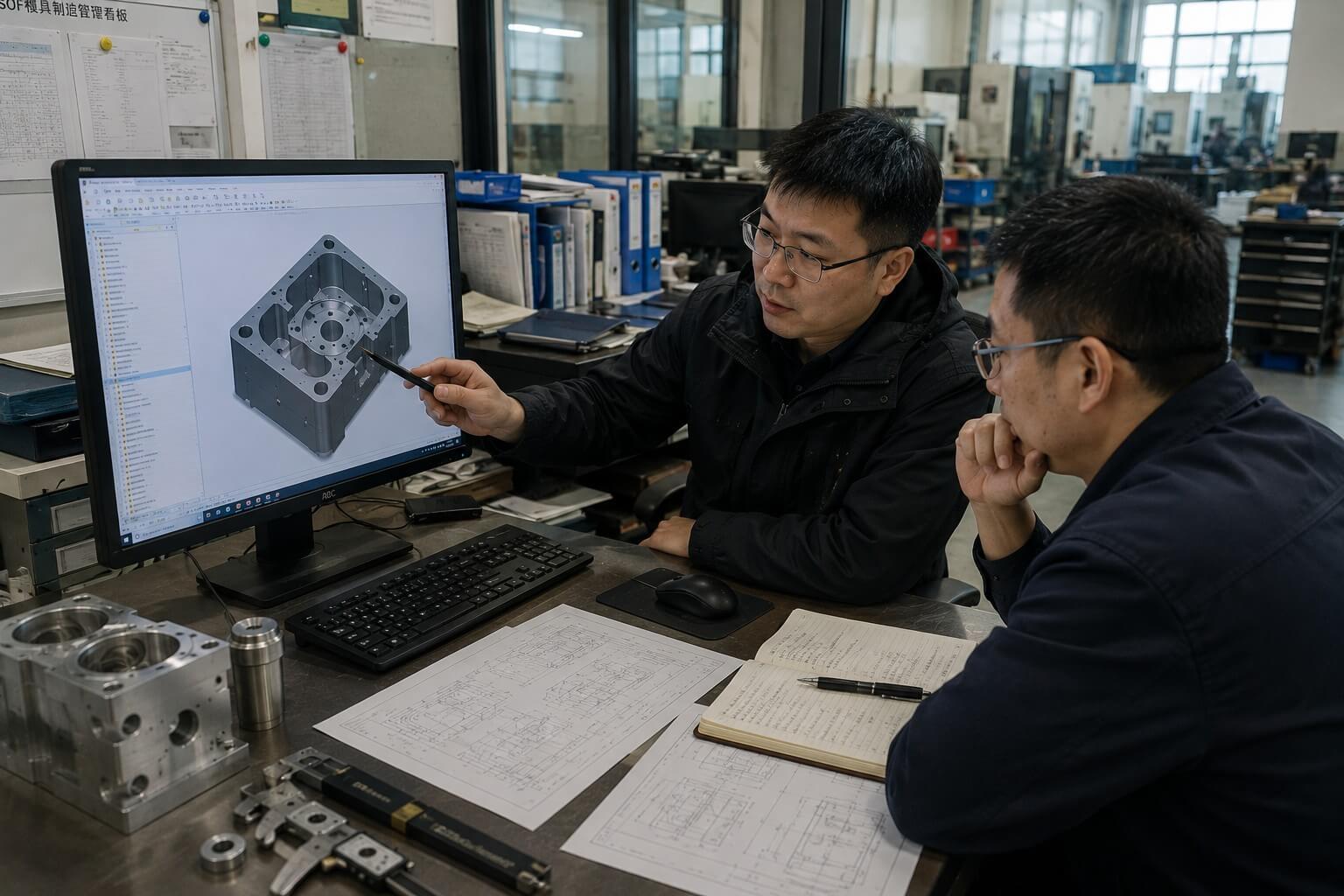
A drawing may contain hundreds of dimensions, but only a small number may determine whether the component assembles, seals, locates or moves correctly. Those features should influence workholding, machining sequence and inspection planning from the beginning.
Before quotation, our engineers review the complete requirement and raise questions where specifications are unclear, conflicting or likely to create unnecessary manufacturing risk.
Pricing, manufacturing lead time, material, surface finish, quantity, proposed process and any engineering clarification required before production.
A prototype order and a repeat production order do not require the same planning. Tianyida adjusts the manufacturing, inspection and communication approach to the maturity and risk of the project.
Efficient for plates, housings, pockets, profiles and components primarily machined from one or several straightforward orientations.
Useful for indexed features, radial details and
multiple sides that benefit from controlled rotation.
Supports complex contours, angled features and multi-face components while reducing unnecessary repositioning.
Drilling, boring, reaming and threading strategies are selected for hole size, depth, location and functional fit.
Toolpaths, tool selection and finishing passes are planned around form accuracy, surface continuity and access.
Heat treatment, grinding, EDM, finishing and assembly-related processes can be coordinated when required by the drawing.
We select 3-axis, 4-axis or 5-axis machining according to feature access, datum relationships, tolerance requirements, surface expectations and production quantity. More axes are not automatically better; the goal is to use the most stable and efficient process for the part. Where the geometry permits, reducing reclamping and machining related features in one controlled setup can improve positional consistency and reduce accumulated setup error.
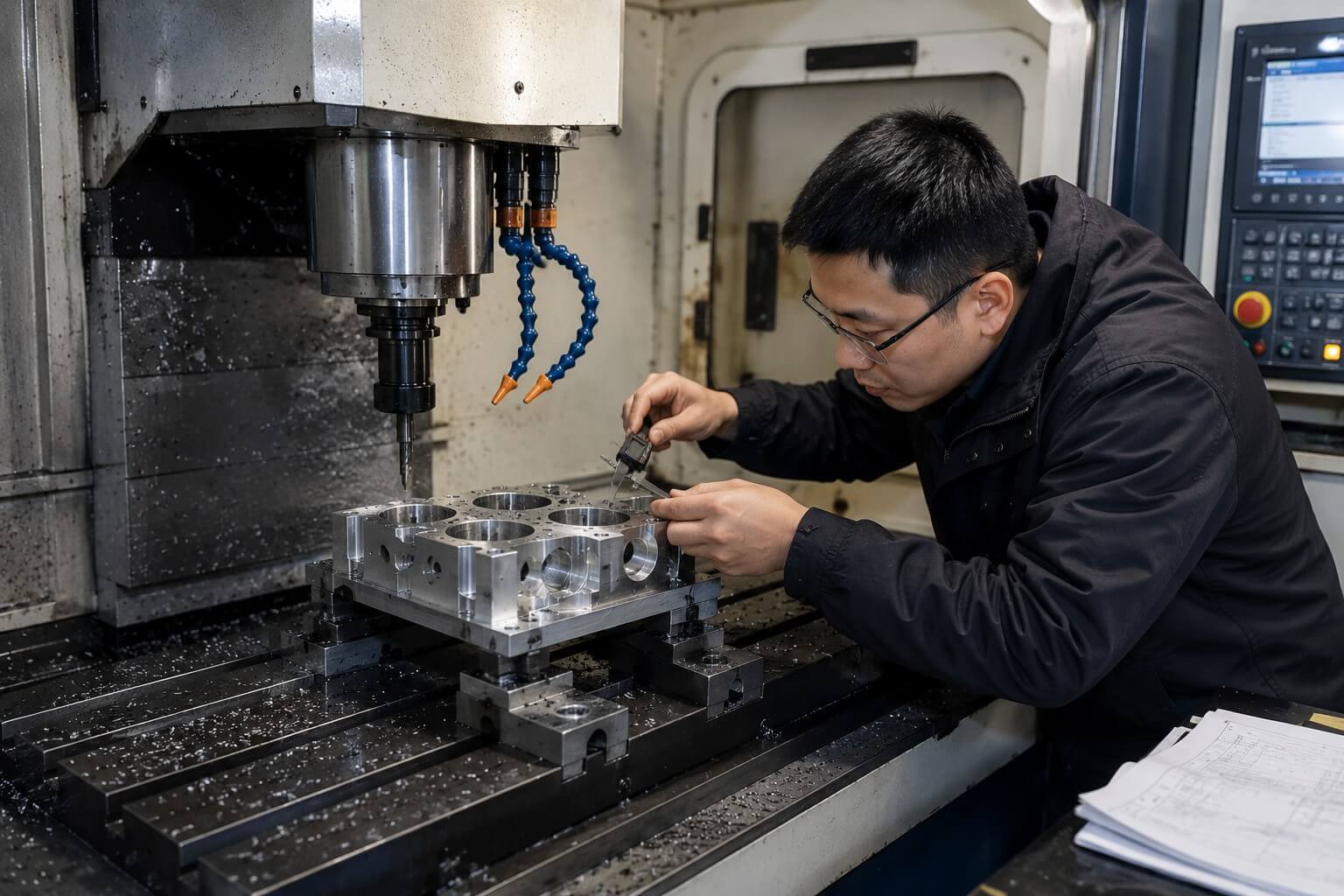
From straightforward plates to complex multi-face parts, each component is produced around its function, tolerance relationships and final assembly.
Machined enclosures and bodies with pockets, bores, sealing faces and assembly interfaces.
Components requiring controlled flatness, hole position and reliable alignment within equipment assemblies.
Custom supports and interfaces with complex profiles, threads, counterbores and locating features.
Locating plates, inspection fixtures, nests, jaws and production aids designed for repeatable use.
Drawing-based parts for automation, robotics, medical, optical, semiconductor and industrial systems.
Components with related features on several orientations requiring controlled datum transfer or multi-axis machining.
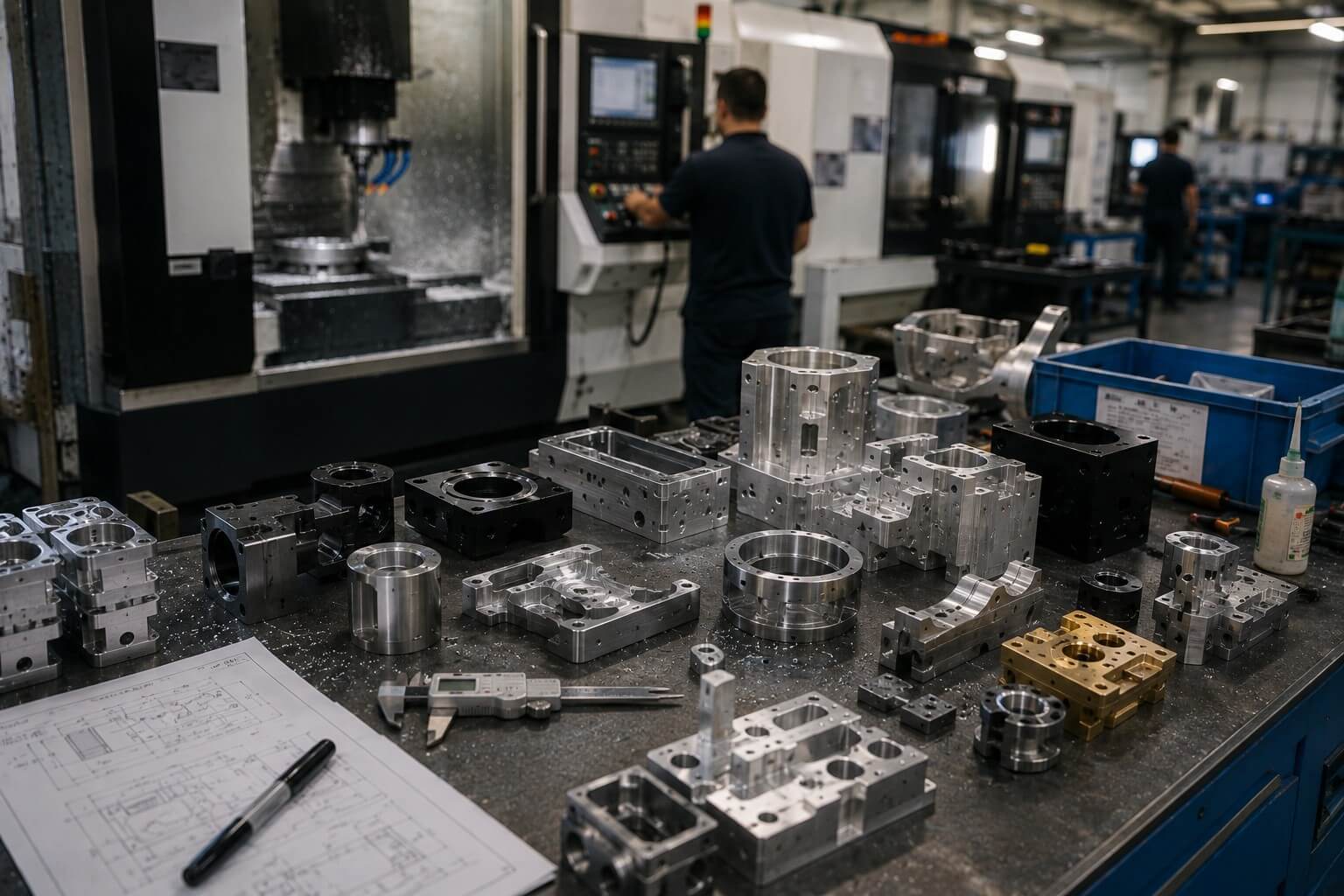
Our CNC milling service supports prototypes, low-volume parts and repeat production across a wide range of component types. The examples below represent common applications rather than a standard product catalogue.
The complete manufacturing route is evaluated for every project, including machining, deburring, heat treatment, surface finishing, inspection and packing.
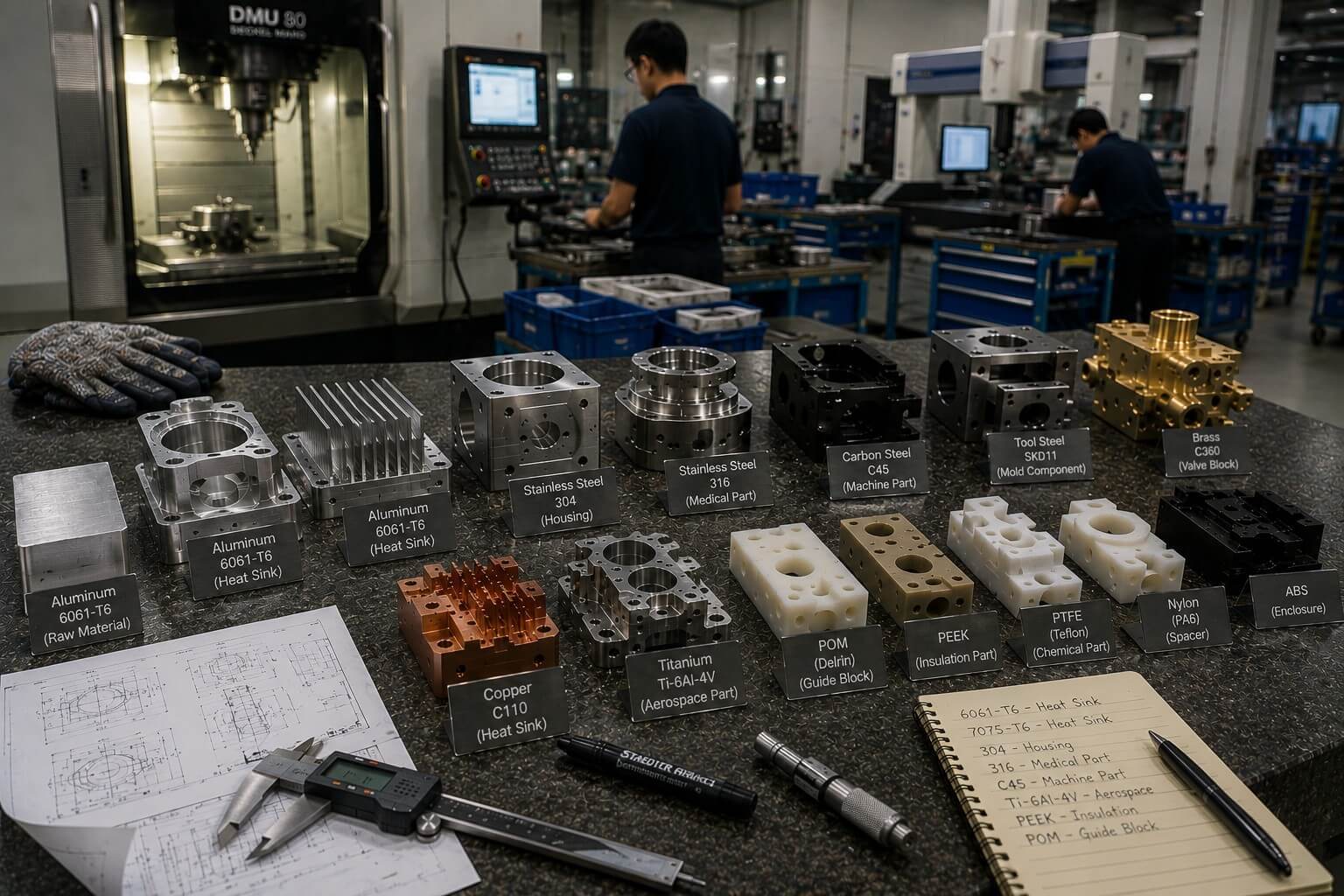
The correct material strategy considers not only strength and cost, but also machinability, heat, distortion, surface finish and dimensional stability.
Lightweight and efficient to machine for housings, plates, automation and electronic components; alloy, temper and cosmetic surfaces should be specified.
Selected for corrosion resistance and strength. Work hardening, heat generation, burr control and passivation requirements affect process planning.
Used for structural, wear-resistant and tooling components, with heat-treatment sequence and final hardness considered in advance.
Applied to conductive, fluid-control and specialized components; grade and surface requirements influence tool and finishing strategy.
Used where strength-to-weight performance and corrosion resistance are important; controlled cutting conditions help manage heat and tool wear.
POM, PEEK, nylon, PTFE, ABS and other specified plastics require attention to heat, deformation, moisture behavior and dimensional stability.
Tianyida machines common metals and engineering plastics according to customer drawings and material specifications. Exact grade, condition and certification requirements should be identified during quotation because materials within the same family can behave differently during machining.
When material selection is still open, we can discuss practical manufacturing considerations; final material approval always remains with the customer.
Finishing should protect the component and support assembly performance—not simply change its color.
Common for aluminum components requiring corrosion protection, wear resistance, color or a controlled appearance.
Create defined textures for visible surfaces and can be combined with other treatments when appropriate.
Provide color and protective coverage for larger components, housings and equipment parts; coating thickness and masking must be considered.
Used for specified stainless-steel applications requiring enhanced corrosion resistance, cleanliness or surface refinement.
Zinc, nickel and other specified coatings can provide corrosion, wear or functional surface properties.
Additional treatments can be coordinated where technically suitable and clearly specified on the drawing.
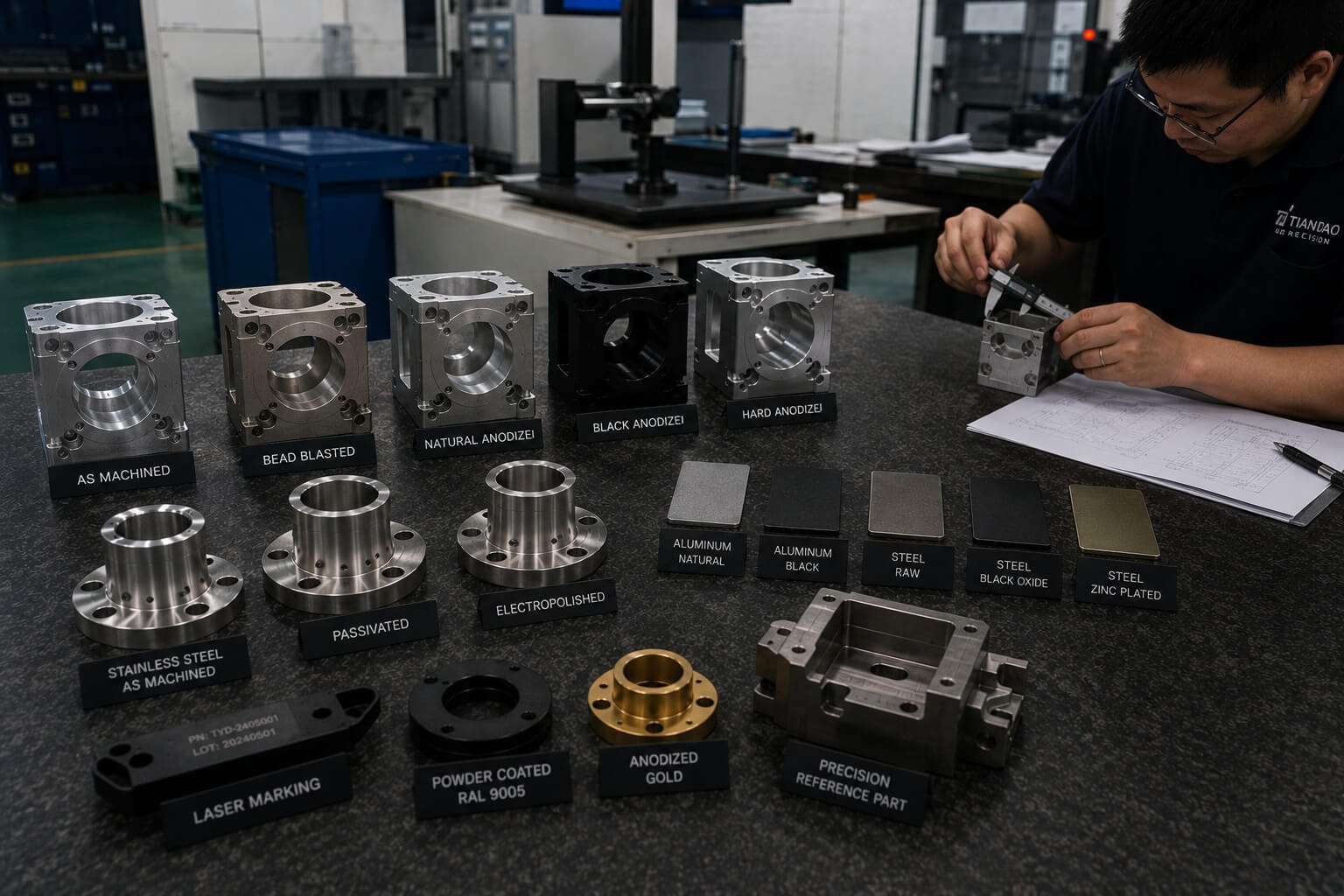
Surface treatments can improve corrosion resistance, wear behavior, hardness, cleanliness, friction or cosmetic consistency. They can also change dimensions, cover threads or affect electrical contact and sealing areas.
For this reason, finish type, color, texture, gloss, masking, pre-treatment and certificate requirements should be confirmed before machining begins. We coordinate suitable finishing processes according to the approved project specification.
Identify cosmetic faces, areas to be masked, threads and bores to protect, color standard, texture, gloss and acceptable visual criteria in the RFQ.
Reliable quality depends on drawing control, stable workholding, in-process decisions and measurement methods matched to the feature.
Current drawings, models, material, finish and acceptance criteria are confirmed before production.
Initial parts are inspected before the process is released for continued production or customer approval where required.
Critical dimensions, tool condition and process stability are checked during production to identify variation early.
CMM, height gauges, micrometers, pin gauges, thread gauges and other suitable methods are selected as required.
Dimensions, workmanship, deburring, finish and specified cosmetic requirements are verified before packing.
First-article, dimensional and CMM reports can be provided when requested and agreed during quotation.
Final inspection cannot correct a weak machining process. We build quality control around the current drawing, the critical datum relationships and the dimensions that directly affect function.
From first-article verification through final packing, inspection points are selected according to geometry, tolerance and production risk. Our parts receive 100% outgoing inspection before shipment.
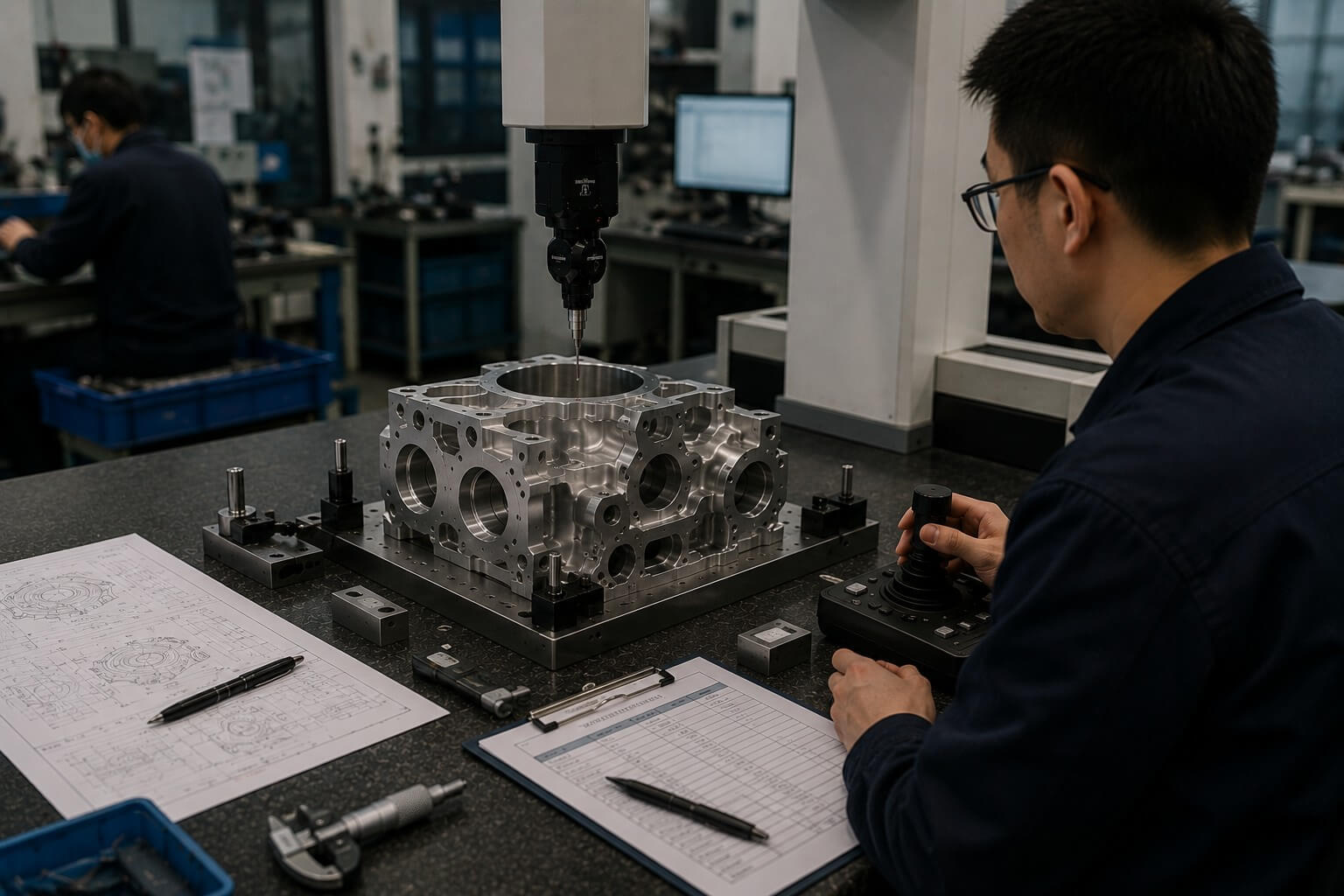
Complexity is manageable when risk is identified early and each critical feature is supported by the right process, fixture and inspection plan.
Workholding, cutting forces, toolpaths and sequence are planned to reduce deformation and protect final geometry.
Tool selection, chip evacuation and staged machining help manage deflection, heat and surface quality.
Datum strategy and controlled setups help maintain the location of holes, bores and interfaces across multiple faces.
Tool orientation and collision-aware toolpaths improve access to angled features and compound surfaces.
Cutting parameters, coolant, tooling and inspection frequency are adapted to heat and tool-wear behavior.
Toolpath transitions, handling and finish protection are planned around visible and performance-critical areas.
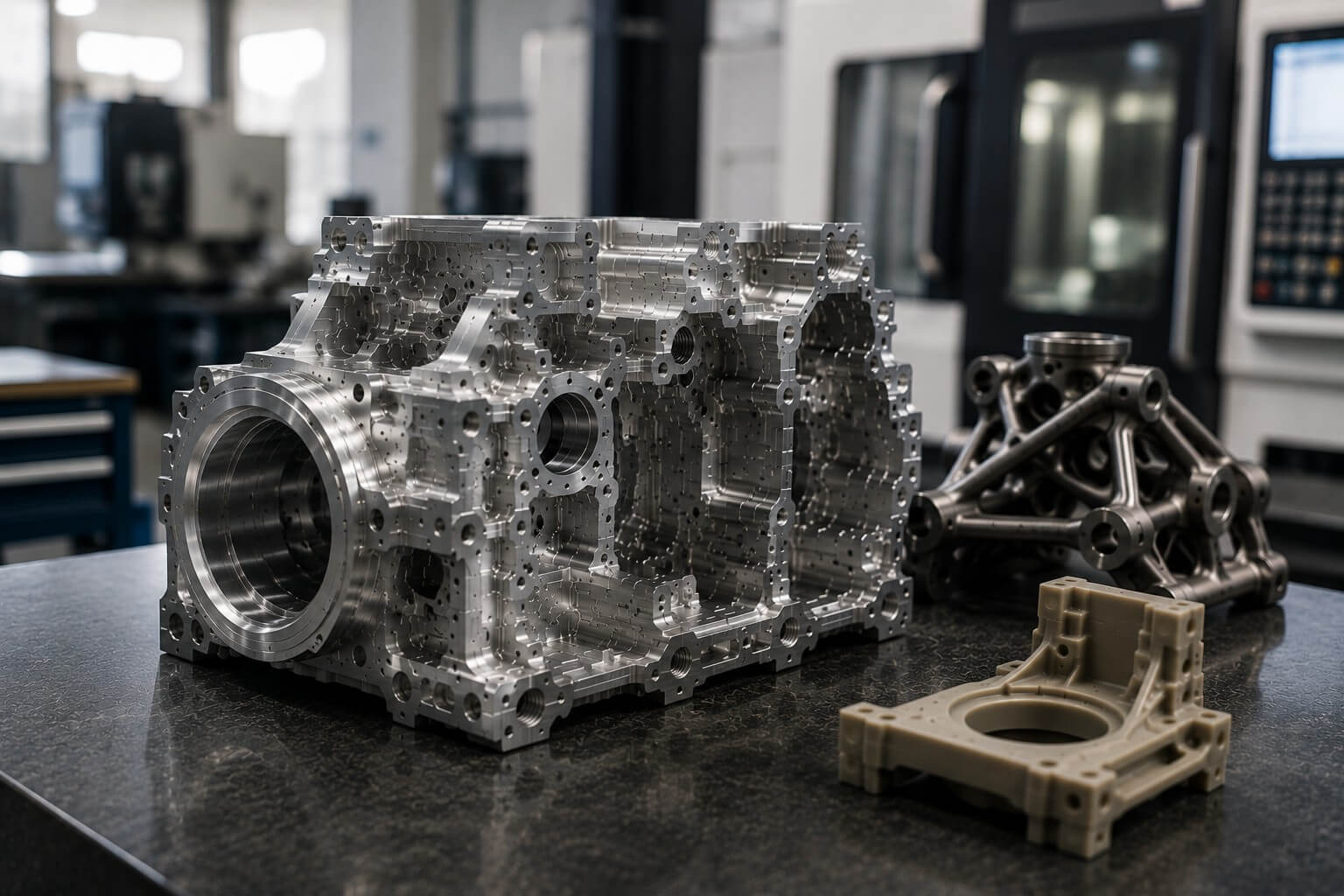
Thin walls, deep cavities, difficult materials, multi-face geometry and tight positional relationships create different manufacturing risks. Applying one standard machining approach to every complex component can lead to distortion, tool-access problems or inconsistent results.
Our engineers evaluate the specific challenge and build the manufacturing route around it—balancing accuracy, stability, surface condition, cycle time and production quantity.
The engineering knowledge gained during prototyping should strengthen production—not be lost when the project scales.
Fast, practical production for design review, fit testing and early functional validation.
Critical requirements and inspection results are confirmed before the project advances
Revised drawings and lessons from initial parts are reviewed before the next manufacturing stage.
Flexible manufacturing supports launch quantities, engineering changes and demand before full production.
Controlled methods, inspection planning and project history support consistent quality across orders.
Communication, engineering understanding and continuous process improvement remain connected to the project.
A prototype validates more than geometry. It reveals how the material behaves, which features are difficult to hold, how the part should be inspected and where the process can be improved before production volume increases.
Tianyida supports projects through development, design iteration, low-volume manufacturing and repeat production. Approved methods and project knowledge are retained to support consistent execution across future orders.
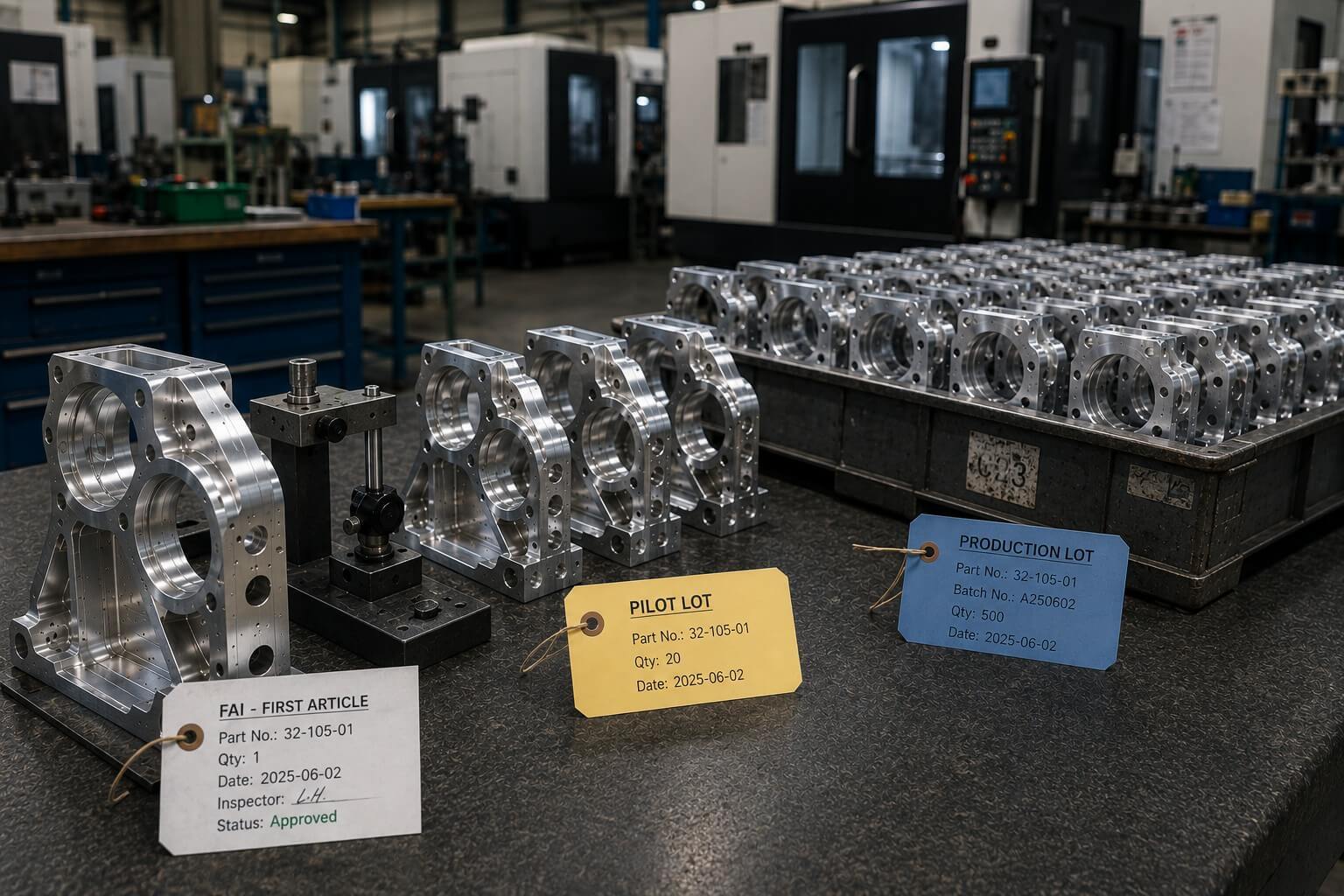
Engineering support, multi-process capability, disciplined inspection and responsive communication keep projects moving from quotation to delivery.
Manufacturability, critical features and unclear requirements are reviewed before commitment.
The machining route is selected according to geometry, tolerance relationships and production needs
Projects can begin with a single part when appropriate, then progress into larger quantities.
Finished parts are checked for specified requirements before shipment.
Technical questions, production status and agreed documentation are managed throughout the order
Export packing, commercial documentation and international shipment can be coordinated according to agreed terms.
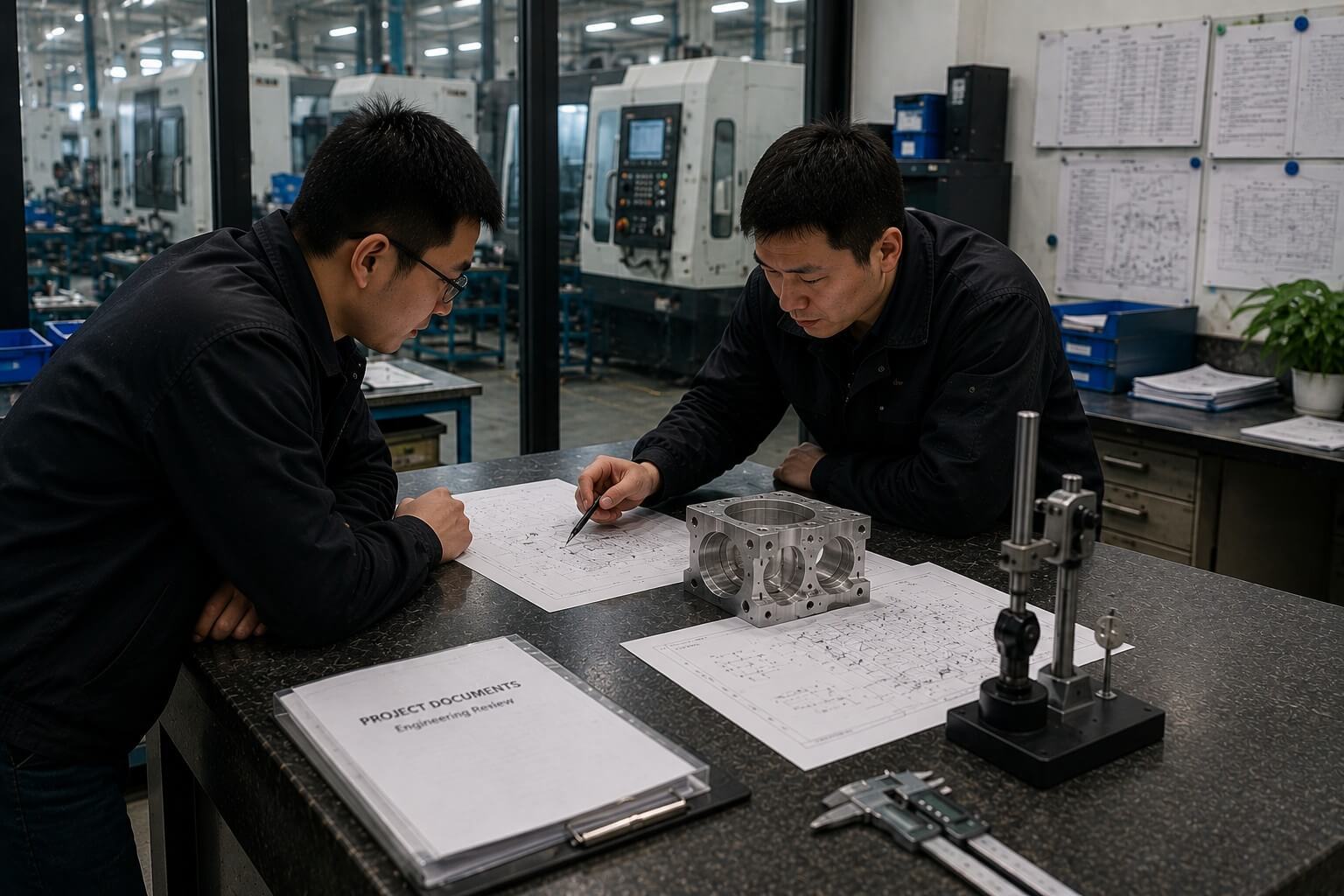
Selecting a CNC milling supplier is not only a comparison of machines and prices. The project also depends on whether the drawing is understood, questions are raised early, the approved process is followed and production information is communicated clearly.
Tianyida combines 10 years of precision manufacturing experience with an ISO 9001:2015 quality system. From our Shenzhen manufacturing operation, we support international customers with prototypes, low-volume parts and repeat production.
Whether you need one prototype, a complex 5-axis component or repeat production, our engineering team is ready to review the manufacturing requirement and clarify the next steps.
Send your CAD model, 2D drawing, material, quantity, finish and delivery expectations. We will evaluate manufacturability, identify important questions and prepare a quotation based on the actual scope of your part.
STEP, STP, IGES, X_T, Parasolid or another suitable 3D format, plus a tolerance drawing.
Exact grade, heat treatment, coating, color, masking and certification requirements.
Prototype quantity, production batch sizes and estimated annual demand where available.
Target date, destination, packaging, inspection reports and any special acceptance requirements.
Shenzhen Tianyida Precision Technology Co., Ltd. is a trusted precision manufacturing partner specializing in CNC machining, sheet metal fabrication, rapid prototyping, and complete manufacturing solutions.